Showing posts with label canada's tallest tree. Show all posts

9/19/2011

The Carmanah Giant

The Carmanah Giant: Diameter - 3 m (10ft), Height - 95 m (315ft), Age - 500 to 700 years

The Carmanah Giant is a monumentally tall Sitka spruce growing in the Carmanah Creek canyon in Carmanah/Walbran Provincial Park. It is the tallest tree in Canada, and the tallest Sitka spruce in the world. The Giant lives in one of the tallest forests on the planet, and is an excellent example of the vanishing primeval forest that once blanketed Vancouver Island.

The trees of the Carmanah and Walbran watersheds escaped the saw for a long time due to their remote location on the West Coast of Vancouver Island. But the arrival of the timber cruisers, bulldozers, road builders, and fallers was inevitable, and in the 1980s they finally came. 

If it were not for conservation efforts, starting with Randy Stoltmann, this magnificent tree and all its neighbours would have surely been razed in a clear cut that would have represented a huge global loss. It would have been a loss, as well, to the pairs of endangered Marbeled murrelets that nest only on the huge branches of old growth trees.

I am glad this incredible tree and the forest in which it grows were saved from impending destruction. However, the Carmanah Giant is not in the "See Them" category of big trees. Visitation to some parts of this park, including the Carmanah Giant, is discouraged in order to avoid the devastating potential results of unregulated access.

Even though I feel the lure of the big trees, many individual trees get loved to death by tourists. For me it is good enough to know that the Carmanah Giant is out there, growing, thriving, and perpetuating 12,000 years of continuous forest processes and cycles.

Photo credit: Iriemaan

6/22/2010

Visit The Big Trees

I just posted a new page for VIBT which is accessed by a button under the banner. It is called "Visit The Big Trees", and in it I list some of the big tree places that I have visited, or would like to visit.

It is my hope that this list will encourage others to visit these ancient trees and endangered places. Some locations are in parks, others are on private land. A few are currently threatened by ongoing logging. By visiting these places we can recognize their importance and work toward preserving them.

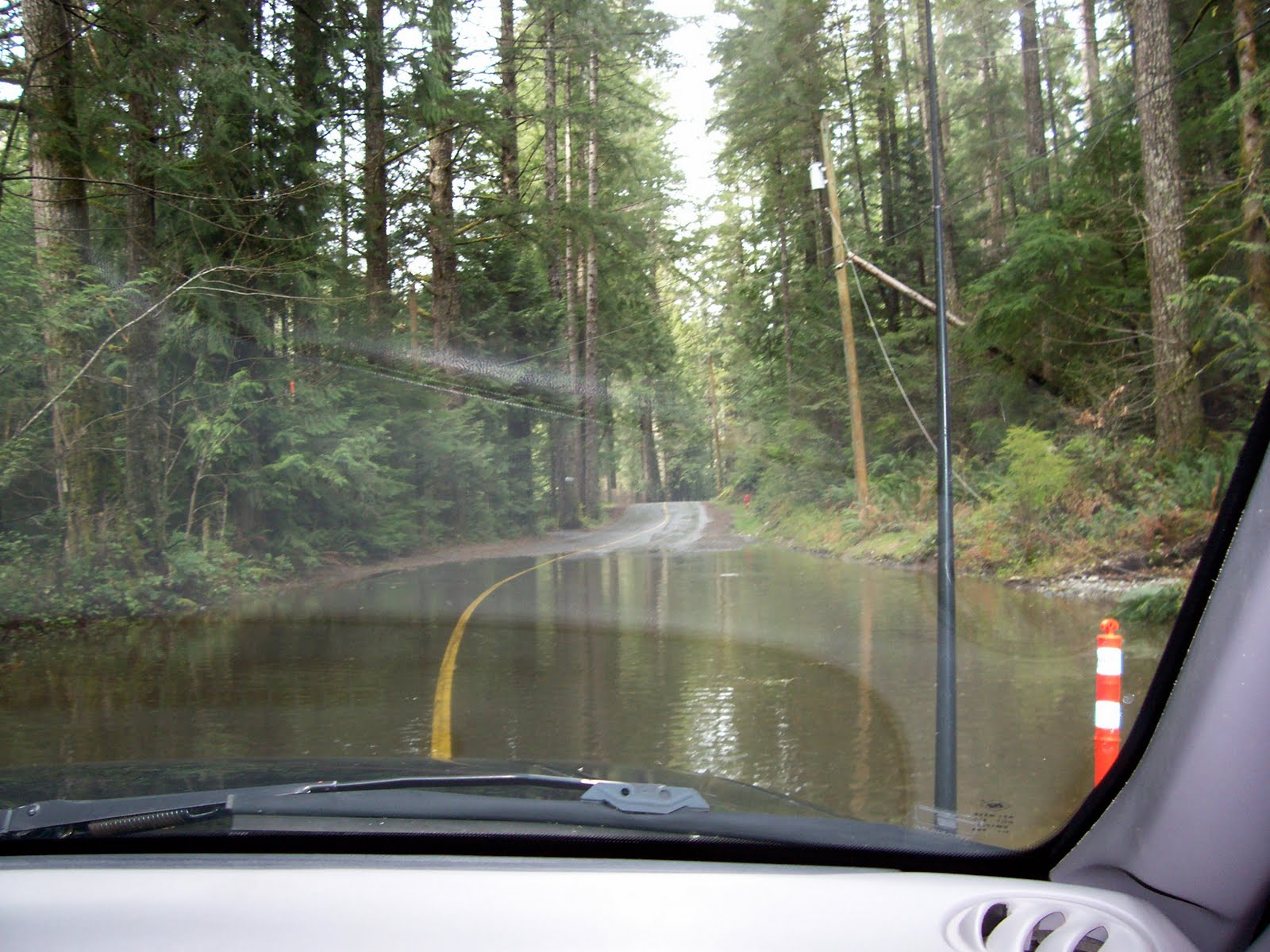
Most of all, I want to introduce people to a beauty that is unparalleled globally. Vancouver Island has some of the most beautiful trees and forests on the planet. Plan to go see them, and prepare to be blown away. Be wary of wild and natural locations. And big puddles.

Link to the 'Visit The Big Trees" page here.

5/30/2010

Vancouver Island Home To Some Of BC's Tallest, Largest, Oldest Trees

Champion Douglas Fir: The Red Creek Fir, Near Port Renfrew, BC
"Tree measuring helps conservation because public support for tree preservation is fueled by the appreciation of champion trees. In an effort to save the best stands of trees, we look for the largest specimens." - Arthur Lee Jacobson
British Columbia's coastal forests are known for growing some of the world's tallest, largest, and oldest trees (see the 'gnarliest' tree here). Vancouver Island is home to some of BC's record-breaking trees, including all of the top Western red cedars and Garry oaks. From dry, rocky meadows dotted with Arbutus in the south, to the wet west coast Sitka spruce, to the east coast Douglas fir belt, many significant trees are to be found here.

It used to be that big tree study was the sole domain of scientists, and a handful of amateur dendrologists that enjoyed crashing through near-impenetrable bush looking for record-breakers. Recent decades have seen increasing interest in trees in general, and record breaking ones in particular. As large, old trees continue to be consumed people are taking notice.

The Internet has helped spread the word. Check out this website that features notable trees from around the world. It was on the net that I accessed British Columbia's repository of provincial champion trees. The BC Big Tree Registry, started by Randy Stoltman in 1986, lists the 10 largest specimens of 40 native tree species.

As I looked at the registry I noticed that there are still many blank spaces, and undoubtedly larger trees exist waiting undiscovered. So get out the measuring implements and set off on a big tree excursion of your own. Record breakers are out there to be found. Anyone can nominate a tree for inclusion.

I have shown the top 3 trees for several common native species from the BC Big Tree Registry (click on the table for a larger image). Measurements include an AFA rating number. The American Forestry Association considers girth, height, and crown spread when it establishes this rating number for champion trees. The methods for calculating the AFA number for a tree can be found here.

Western red cedar


All of the Western red cedar in the Big Tree Registry reside on Vancouver Island. The cool, wet climate here favours these long-lived giants. The registry's shaggy cedar champion, the "Cheewhat Lake Cedar" is not only Canada's largest tree (by volume), but more than likely its oldest as well, possibly up to 2000 years old.


Spruce


Other notable champion Sitka spruce include the Carmanah Giant, Canada's tallest known tree at 96m/315ft. Found in Carmanah/Walbran Provincial Park, this pillar of wood is 5th on the list with 703 AFA points. 6th on the list is the spruce found at San Juan Bridge picnic area near Port Renfrew. If ordered by circumference this hefty contender would bounce the Carmanah Giant out of 5th place.

Douglas fir


The champion Douglas fir, the Red Creek Fir, stands above all its neighbours not far from Port Renfrew. Also on the list of champion Douglas firs are trees at Cathedral Grove near Port Alberni, and Francis King Regional Park near Victoria. The tallest Douglas fir in the registry is in the Coquitlam watershed that tops out at 94m/310ft. It has an eighth place standing with 643 AFA points.


Hemlock


Most of Vancouver Island is in the coastal hemlock zone, so it is fitting that the 2nd and 3rd place champion trees are here. Quisitis Point is in Pacific Rim National Park, and Cous Creek is near Port Alberni.

Arbutus (Pacific Madrone)


The third largest Arbutus on the registry shows that not all champion trees are in the deep, dark, dripping forest. This champion is in a developed area, on the Canadian Forces Base in Esquimalt. Adding to this distinction is its great girth - it has the largest recorded circumference of any known Arbutus.

Pacific yew


The number 2 Pacific yew, the champion with the greatest circumference, resides in the Muir Creek watershed west of the town of Sooke. This unprotected ancient forest includes old trees in an undisturbed setting, a salmon-bearing creek, and a host of unique plants and animals making it an ideal location for conservation.

2/25/2010

VIBT Big Tree Olympian Awards


"Giants like this will not be seen again
for five or ten centuries, perhaps never."
Randy Stoltman, Big Trees (1987)

photo: http://www.cathedralgrove.eu/text/01-Cathedral-Grove-3.htm


Never mind Olympic hockey, I'm rooting for the ancient forest Big Tree Olympians - the heroes of big tree preservation. The Pacific coast forest has some of the biggest trees around, and thankfully, it has individuals that have worked for years, usually without pay or recognition, to protect this vanishing
10 000 year old forest ecosystem.


I thought it fitting during the 2010 Winter Olympics that VIBT hands out a few medals of its own in recognition of those who have gone Citius, Altius, Fortius in their passion and dedication to the big trees and the things that live among them.


Often these defenders of the voiceless and powerless do their work at great personal sacrifice, up against well-funded corporate lawyers, an endless drive toward growth and profit, and intransigent government officials.


Tourism BC's recently revamped website states that "much of Vancouver Island is protected parkland", and that it contains "many pockets" of old growth forest.


What it does not tell you is that the grandeur of these disappearing islands of isolated ancient trees is surrounded by industrial clear cuts and 2nd or 3rd growth tree plantations. 75% of Vancouver Islands original forest has been logged.
Cheewhat Cedar, Pacific Rim National Park


Since saving the big trees is a cooperative effort, rather than a competitive one, the Big Tree Hunter Olympian Awards are non-hierarchical dendro-medals. There are no losers here - everyone wins.


Randy Stoltman Grove, Carmanah/Walbran Provincial Park
Photo: http://www.cathedralgrove.eu/text/05-Pictures-Politics-3.htm


In no particular order, VIBT salutes the following enthusiasts who have worked tirelessly in the defense of big trees and ancient forests. Their dedication will allow future generations to see that at one time giants inhabited the Pacific coastal forest:


The Cedar Medal: Maywell Wickheim, Sooke: discovered the Cheewhat Cedar, Canada's largest tree. Has guided many hikes while educating others about the beauty and importance of big trees and wild places.


The Douglas fir Medal: Paul George, Gibsons: co-founder of Western Canada Wilderness Committee, an organization that has been educating the public and lobbying to ban the logging and exporting of ancient B.C. forests since 1980. They have an admirable list of successful campaigns including Clayoquot Sound, the largest area of ancient temperate rain forest left on Vancouver Island.


The Sitka spruce Medal: Randy Stoltman, deceased: big tree enthusiast and campaigner for WCWC. Discovered the tallest Sitka spruce trees in the world in the Carmanah watershed, and fought for protection of the area. Carmanah/Walbran Provincila Park, including the Randy Stoltman Grove, is a stunning cathedral of mist and green.

VIBT 'boughs' before the generous efforts of these Olympians.


The very pockets of old growth Tourism BC is touting on it's website would be gone if not for people like the award recipients.

Hanging Garden Tree, Meares Island, Clayoquot Sound
Photo: http://www.gotofino.com/tofinohikingtrailsbigtreemeares.html

Western Canada Wilderness Committee reports that 13% of Vancouver Islands's total land base is protected, but this includes only 6 % of its productive forests.


The remaining 94% of forests, including what is left of the old growth, is for industry, I guess. Unless we do something about it. Even Olympians need support.


Ask questions and avoid purchasing old growth wood products. Write your political representatives demanding an end to old growth destruction. Donate to forest preservation groups. Wipe with only 100% post-consumer toilet paper. Use alternatives, like rags, to disposable paper products. And see the big trees to see what we are in danger of losing.


Do you know someone who is working to save big trees and ancient forests? Please leave a comment here, or contact me via my profile to nominate for next year's 2nd Annual VIBT Big Tree Olympian Awards.

12/31/2009

The Tallest Spruce Trees In The World: Carmanah/Walbran Provincial Park


My first visit to Carmanah Walbran Provincial Park was summer of 2006. It was a slow, rough drive into the heart of Vancouver Island's once-magnificent coastal forest. Our route took us from Sooke to Port Renfrew, past Cowichan Lake, and on to Nitinat Lake. The last services of the route are here, then the road climbs on toward the park. A sturdy vehicle, emergency supplies, and a good driver come in handy. A back roads map is essential.

While bumping along Rosander Main logging road past Nitinat, we were treated to vistas over the green mist-cloaked hills to the distant Pacific Ocean. Not far away is the West Coast Trail, but it is inaccessible from this side. We continued following the small provincial park signs sensing that we were getting close to Vancouver Islands tallest trees.

In addition to the coastal forest landscape you will witness "off-road" logging trucks carrying old-growth logs - only four or five huge columns of wood to each giant vehicle. This is a harsh and unforgiving forest environment and the road and industrial activity do not make it any safer. But without these roads most of this area would be largely inaccessible. Drive defensively - industrial traffic has the right of way and you must yield to them.

Knowing that in the mid-1980's the Carmanah valley was slated to be harvested makes it worth dodging logging trucks on roads riddled with potholes and stretches of washboard that will rattle your old fillings out. The park at the end of this road is unlike any other you have seen, or are likely to see anywhere else. It is a gargantuan green cathedral of mist-filtered light and stillness.

Carmanah valley was once considered too remote for profitable logging to take place. Then Randy Stoltman found the oldest, largest Sitka spruce trees in Canada, and the world. In the 1980's the B.C. government, without public consultation or notification, gave MacMillan Bloedel permission to clear cut the area.

Fearing a repeat of previous logging fiascos that ended in protest and protection, the logging company moved in quickly to harvest the valley. Randy Stoltman, tireless big tree defender, along with the Western Canada Wilderness Committee, mounted a campaign to protect the area's natural assets from destruction. In 1990, after sustained protests, Carmanah Park was formed.

At the end of your jarring ride you will find a pristine valley full of some of the world's largest trees. Today you will only see trees like these in small patches along the west coast of North America, and the forest of Carmanah Walbran holds some prime examples in a relatively large area. If you are not humbled here, you are not paying attention.


After passing through large clear cuts, one which extends right to the park gate, we arrived at the parking lot at the end of the road. I gazed up the trail at two tiny hikers dwarfed by the surrounding giants. I thought that the destruction of these trees to make plywood would be similar to going to the Temple of Karnak in Egypt, "harvesting" its 5000 year old columns (21m tall, and over 3m diameter), and crushing them to make gravel. Large Sitka spruce can be only a few hundred years old, but Western red cedar can grow for thousands of years. There are many large cedars in the park.


Canada's tallest (known) Sitka spruce (Picea sitchensis), the Carmanah Giant, towers 95 metres (315 ft) over the lush valley of Carmanah Creek. Its 9.4 meter diameter makes Karnak's columns look like toothpicks. However, visitors are not encouraged to hike the deteriorating trail to visit this record tree for fear of compromising the areas ecological integrity. It is good enough for me just to know that the Giant exists.

The third largest Sitka spruce in the world with a wood volume of 298 cubic meters (10,540 cu. ft.). It is 58.2 m (191 ft) high with a diameter of 5.39 m (17.7 ft.) at 1.37 m (4.5 ft.) above the ground. (Van Pelt, Robert, 2001, Forest Giants of the Pacific Coast, University of Washington Press.) http://en.wikipedia.org/wiki/File:QuinaltSpruce_7246c.jpg

The park is in the Very Wet Hypermaritime subzone, an area that is intimately affected by the nearby ocean, and can be wet any time of the year. When we visited it was drizzly, but the real problem was the cloud of mosquitoes hunting us down. Our meals were eaten with one hand shoveling the food in, and the other hand waving the mosquitoes away. When even that became too much the only option was to run through the parking lot taking hasty stabs at our food.

Mosquitoes may be the most obvious wildlife here, but they are not the only wildlife. The old growth forest here maintains a rich web of life that can not exist in the second and third-growth forests that have replaced the original forest on much of Vancouver Island. This is a special place.

Spotted owls, marbled murrelets, wolves, trout and salmon, black bears, bats, pileated woodpeckers, red-backed voles, salamanders, banana slugs, flying squirrels. All of that and more is here to be discovered, enjoyed, and protected.

Carmanah Walbran Park is isolated and difficult to get to, and once there you will find no comforts of civilization. This park is about wilderness, and in that regard it delivers. However, encroachement continues. Without a buffer zone, clearcuts extend right up to park boundries. As we hiked and camped in this magical place we watched helicopters swinging giant columns out of the surrounding forests to staging grounds. Their thundering rotors resonated in our chests, or was that our hearts going out to the destruction of the 10 000 year old forest and the creatures that used to live there?

If not for Randy Stoltman, the Western Canada Wilderness Committee, and thousands of regular big tree supporters, Carmanah valley and the largest Stika spruce on the planet would have been reduced to a ravaged landscape.


View Larger Map

For now it remains one of the most beautiful places I have ever visited. If the government works for us, and we want big trees saved, then why is the government backing the logging companies and the temporary jobs that old growth harvesting represents? What will they do when all the old growth is gone?

Visit Carmanah Walbran and try not to become a big tree enthusiast. This is the kind of place that can change your life. It did mine.