6/26/2010

Don't Forget To See The Forest


Often the big trees in the Pacific coastal forest become the celebrities. It is not difficult to see why as champion trees can be as wide as a house and as tall as a 30 floor office tower. Equally as impressive, however, is the forest ecosystem in which these behemoths live. While big tree hunting do not forget to look around and see the forest. You will be amazed all over again.


This carefully knit ecosystem has been thriving for the last 10 000 years, since the retreat of the last ice age. In that time a community of living things has evolved to cooperate in a sustainable, and stunningly beautiful manner.


The most obvious members of this ecosystem are some of the largest trees in the world. But beneath the damp earth that the massive trunks rise out of, a less obvious organism quietly goes about its work.


Varieties of fungal threads run below the ground for kilometers. These vast networks of threads are now understood to be the largest living things on Earth. In 2000, researchers in an Oregon forest were astonished to find a fungal mass that was estimated to cover over 2,200 acres (890 hectares) and to be at least 2,400 years old.


All we ever see of this amazing organism is what we know as mushrooms, or fruiting bodies, which are a small part of the whole. When author and environmental activist Derrick Jensen was introduced to the importance of fungus to trees and forests he said, "I thought a forest was made up entirely of trees, but now I know that the foundation lies below ground, in the fungi."


Fungus, flowering plants, slugs, moss, lichen, salal berries, birds, and large predators all form an intricate web of life in the forest. Enjoy the big trees. And their home.


6/22/2010

Visit The Big Trees

I just posted a new page for VIBT which is accessed by a button under the banner. It is called "Visit The Big Trees", and in it I list some of the big tree places that I have visited, or would like to visit.

It is my hope that this list will encourage others to visit these ancient trees and endangered places. Some locations are in parks, others are on private land. A few are currently threatened by ongoing logging. By visiting these places we can recognize their importance and work toward preserving them.

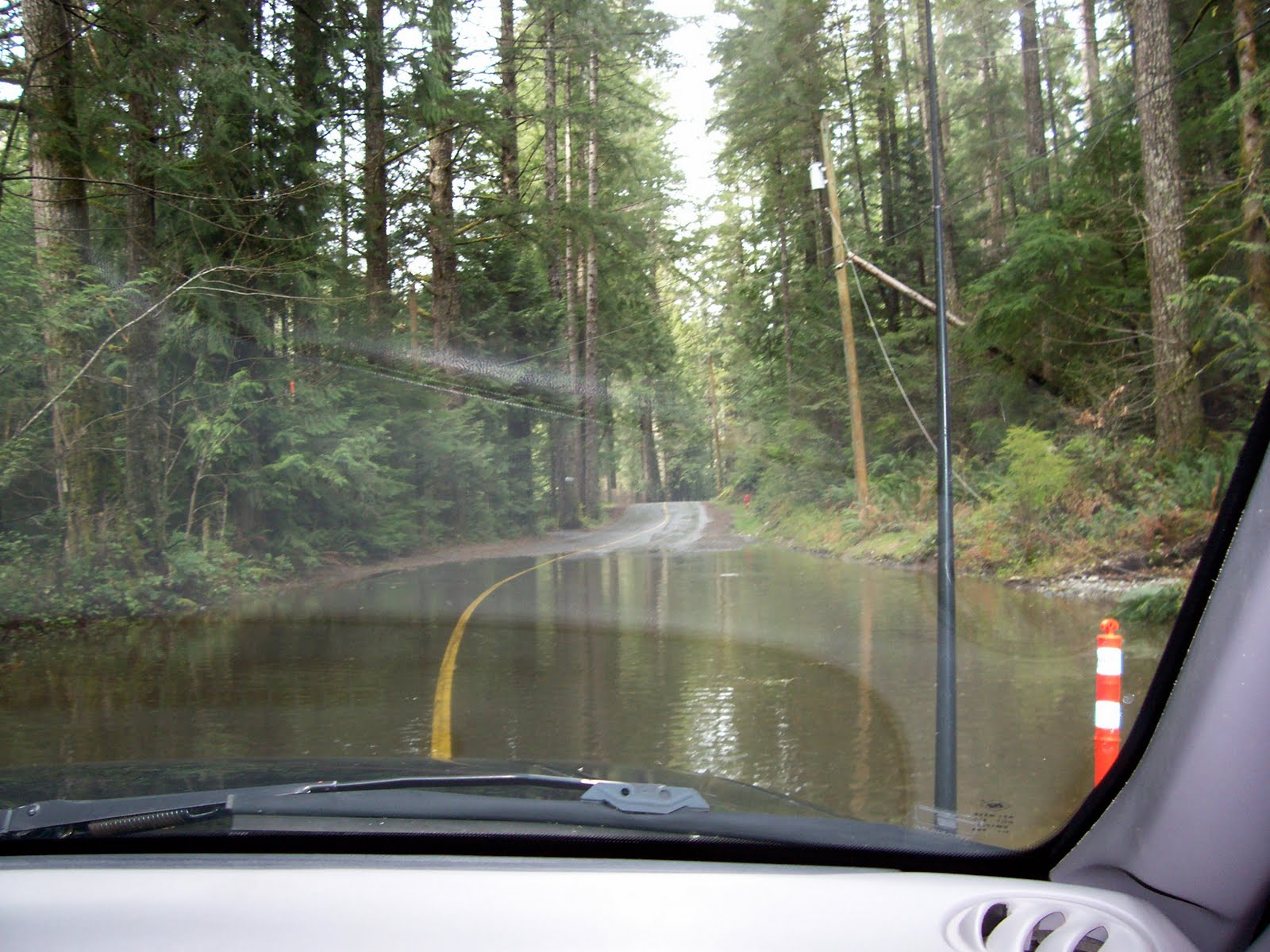
Most of all, I want to introduce people to a beauty that is unparalleled globally. Vancouver Island has some of the most beautiful trees and forests on the planet. Plan to go see them, and prepare to be blown away. Be wary of wild and natural locations. And big puddles.

Link to the 'Visit The Big Trees" page here.

6/15/2010

Beachcombers Struggle To Maintain Coastal Way Of Life

Professional log salvaging began along the B.C. coast in the late 1880's, and beachcombers have been wrangling stray logs ever since. It has always been a tough way to make a living.

Marine log salvaging increases the efficiency of logging operations by eliminating a source of waste. It also makes maritime travel safer by removing dangerous logs from waterways and shipping lanes.

A downturn in the logging industry means a downturn in the amount of logs available for salvage. These are tough times for log wranglers that retrieve logs that come loose from booms during transportation to the mills.

Marine log salvage is closely controlled by the government, salvage log purchasers, and logging companies. The Vancouver log salvage district, extends from Otter Point on southern Vancouver Island, up the Fraser River into Harrison and Stave lakes on the Lower Mainland, and includes the entire Strait of Georgia and Queen Charlotte Strait.

According to civil law, any log that a salver finds belongs to them, unless someone else can show better title. Logging companies show their ownership of logs by stamping or branding them with their registered timber mark, marine log brand, or ownership tag.

When Comox Logging boomed its logs from Vancouver Island across the Strait of Georgia to Fraser Mills up the Fraser River, its logs bore the circle F log stamp. While the logs were still in the forest the chaser (a member of the skidder crew) would wack each end of every log with a heavy branding hammer, denoting ownership.

These log stamps compressed the grain of the tree for a metre or more up the log. This means that if a beachcomber illegally tried to cut the ends off the logs, the brand would still be visible.

Marine log salvaging was immortalized in CBC's TV program The Beachcombers, which ran from 1972 to 1990 and is still the longest-running dramatic series ever made for Canadian television. Nick Adonidus and friends 'lived' in Gibsons Landing on the Sunshine Coast, a place that has seen thousands of log booms pass by.


On my local 1 km stretch of west-facing beach what usually washes up are whole trees that have fallen into the Sooke River and then are washed down into the harbour with winter storms and high water. It wasn't always that way though.

While talking to a neighbour on the beach I heard that decades ago a person could walk this entire length of beach and never touch the ground. That is how log-strewn the beach was back then. Stray logs everywhere.

It just so happened that the day we had this conversation was the day that a large Western red cedar log washed up on shore. Another beach walker joined the conversation and commented that in his opinion the log was worth many thousands of dollars, and that the owners would be scouring the area looking for it.

My neighbours told me that someone up the river is logging old Western red cedars for shakes and shingles. Somehow a few logs and some logging debris (roots and stumps) were swept into the river by high water levels. Not long after the log washed up I noticed a huge stump of equal proportions in the river upstream of the bridge into town.

A couple more heavy rains combined with high tides and the stump was washed out into the harbour where it lodged on a sandbar. Shortly after that I saw a salvor standing on top of the stump with a gigantic chain saw trying to cut off the bottom part of the tree. He eventually gave up, but next high tide he was out there with his boat hauling the valuable stump away.

This incident made me think of the approximately 100 remaining salvors in the Vancouver log salvage district. With the logging industry changing rapidly these independent workers are having a tough time making ends meet. It's not just our forests that are changing on the coast. Out here entire ways of life that were dependent on resource extraction are becoming endangered themselves.

6/07/2010

Directions to Cheewhat Lake Cedar Trail

Cheewhat lake is in a remote location on south west Vancouver Island. It is reached using industrial logging roads that are known tire eaters. A friend of mine on a recent trip to nearby Nitinat Lake had the pleasure of three flat tires along this stretch of road. He was prepared with a small electric tire pump, tools, and a tire patch kit. If you are still interested, directions to the Cheewhat Lake Trail are below.

In 1988 long-time Sooke resident Maywell Wickheim discovered the Cheewhat Lake Cedar growing on the eastern side of Cheewhat Lake. It remains the largest known Western Red Cedar in BC, and grows protected in old forest in Pacific Rim National Park. However, this fragile and vanishing forest is susceptible to blow down from nearby logging.


The Cheewhat Lake Trail is recommended for experienced hikers due to its poor and unmaintained condition. Losing the trail and ending up navigating your way through an extensive blow down area, in the rain, as dusk in approaching, is no fun and potentially dangerous. Exercise extreme caution.

Roland and his wife discovered some of the potential pitfalls of hiking Vancouver Island's wild forests:
"Yesterday (27/7/07) my wife and I attempted to find this tree. The way is VERY poorly marked with tape. Saw some big cedars, but never found the Cheewat. Tapes petered out and we got lost searching for tree. Eventually had to bushwack back out the the road. VERY hard.!Took us two hours!! This trail is dangerous without GPS!!"


View Larger Map


Directions To Cheewhat Lake Trail (Adapted from: Hiking Guide to the Big Trees of Southwestern British Columbia by Randy Stoltman)

Follow highway 18 from Duncan to the town of Lake Cowichan. From Lake Cowichan drive the shore of Cowichan Lake to Heather Campsite at the Western end. From the western end of Cowichan Lake, follow the Nitinat Mainline logging road for about 20km (12m) to the junction with Carmanah Mainline.

Keep left at the Carmanah Mainline and follow the road - watch for signs for Carmanah Park. After crossing the Caycuse River, keep right on Rosander Mainline at the "T" junction. Near the top of the hill the road will cross a narrow bridge. This bridge crosses a notable limestone box canyon 45m (150ft) deep.

Rosander Mainline will traverse the hillside above the east shore of Nitinat Lake, climbs steeply, then drops into the Marchand Creek valley. The road winds down into the valley, then after several bridges rises gently.

After a wide clearing the road enters a logged area. Park safely off the road at the first widening of the road on the right after entering the clear cut. Nearby a rough, overgrown track leads down into the clear cut.

Follow this track down and across the slash. As the track rises slightly and bears left along the edge of the old-growth forest that marks the boundary of Pacific Rim National Park Reserve, look for a huge cedar stump 4.6m (15ft) across. Ring counts of this stump totaled 968 years. Another stump nearby has 1212 intact annual rings, plus it has a hollow center - this tree could have been as old as 1400 years when it was cut down.

The Cheewhat Lake trail is roughly marked with flagging, but it is easy to lose ones way here. The trail begins near an area of blow down along the park boundary, and the initial start to the trail is obscured with fallen trees. After carefully negotiating your way over, under, and around the downed trees, the trail will descend to the right through the blow down.

Pick up the trail again at a flat covered with ferns and huge cedars. The largest tree in this grove is over 4.6m (15ft.) thick, but the grove itself has been affected by more blow down due to inadequate park buffer zones.

Beyond this grove carefully follow the vague and poorly marked trail. It heads to the right over a low ridge, then doubles back to the left along a bench land through dense salal and cedar-hemlock rain forest. The trail will turn downhill and passes two Western red cedars growing by each other. The bigger of the two is 5.5m (18ft.) in diameter.

A short distance downhill and left you will find the awe-inspiring pinnacle of The Cheewhat Lake Cedar. This champion tree is 6.0m (19.7ft) in diameter and 59m (194ft) tall. Nearby are many other large cedars scattered through the original, wild forest.

If you go, enjoy this precious landscape and use it carefully. Stay on the trail, if you can find it, and pack out all garbage. Most of all, enjoy Canada's largest tree, The Cheewhat Lake Cedar.

6/05/2010

Building With Wood: Sooke's Accessibility Ramp/Marine Boardwalk


It is hardly surprising that Sooke should sport the world's longest wooden access ramp. This is the land of big trees after all, and trees mean wood, one of the most versatile building materials on the planet. Not only versatile, but if used properly, renewable as well.


Ed MacGregor Park, near the centre of town, provides access to the impressive wooden structures known as the Accessible Walkway and Marine Boardwalk. This combination makes the park, trees, waterfront, and views over the Juan de Fuca available to all. These impressive wood structures continue a long-standing tradition of working with wood on the coast.


The Coast Salish, this area's original inhabitants, have been using Western red cedar extensively for thousands of years. Items made from wood include clothing, totem poles, art, and large structures. Huge longhouses of cedar split plank accommodate up to 50 people. Ocean-going canoes made from massive whole cedar logs plied the waters from Alaska to California.


European settlers have also used the abundant wood resources of Vancouver Island to build impressive structures including houses, piers, and boardwalks all over the world. The piers of San Francisco were built with wood from Vancouver Island. Some of the largest wooden rail trestles in the world, such as the Kinsol Trestle, which will soon undergo refurbishment, is one such structure. This massive engineering feat near Duncan was completed in 1920 using massive Douglas fir beams.


Most trails on the coast use wooden structures to aid hikers in their passage through the rain forest. A hiker is very likely to be thankful for the careful work of trail builders and wood workers that construct bridges, boardwalks and ladder systems in order to cross the rugged terrain.


Wood is an amazing material, and I am continually surprised and delighted by the many things people have done with it. Pacific coast builders and artists have continued a unique wood-centered culture. I am not sure if the Ed MacGregor Accessible Walkway is the longest such ramp in the world, but it is an impressive engineering feat.


Try the zig zag switchbacks some time, then walk the 1000m Marine Boardwalk. At the other end of the boardwalk you will find a couple of sets of wooden stairs leading up to Murray Road. If you walk Murray back up to Sooke Road you can then hang a left and complete the loop at the Ed MacGregor Park parking lot. Don't forget to enjoy the trees along the way... and perhaps thank them.


6/01/2010

Urban Big Trees - Sooke's Billings Spit Cedars


In an ideal world all utilities would run underground. If they did, our trees would be one of the biggest beneficiaries. In cities and towns across the land trees are mutilated in the name of keeping the power flowing. And keeping the power flowing can be difficult in big tree country during a windstorm, so trees must be trimmed. Here is an example of an impressive Western red cedar that has received a "bole cut" in order to clear the way for the power lines.


One thing the trim did was reveal some of the inner structure of this amazing tree. Possibly hundreds of years old, this tree shows its age with several major vertical branches forming a candelabra of leaders. The trunk is buttressed and thick with time, and it hosts several branches that would be large trees on their own.


There are several large and ancient cedars along Glenidle Rd. on Billings Spit in Sooke, including this one. Billings Spit is good cedar habitat. It is wet and often misty on the point dividing Sooke's harbour and basin. The other cedars are away from the power lines so escaped the embarrassing trim, but they are all impressive. It is amazing that these trees have survived the development of this area. I am glad they have because they are a major feature of the neighbourhood.

5/30/2010

Vancouver Island Home To Some Of BC's Tallest, Largest, Oldest Trees

Champion Douglas Fir: The Red Creek Fir, Near Port Renfrew, BC
"Tree measuring helps conservation because public support for tree preservation is fueled by the appreciation of champion trees. In an effort to save the best stands of trees, we look for the largest specimens." - Arthur Lee Jacobson
British Columbia's coastal forests are known for growing some of the world's tallest, largest, and oldest trees (see the 'gnarliest' tree here). Vancouver Island is home to some of BC's record-breaking trees, including all of the top Western red cedars and Garry oaks. From dry, rocky meadows dotted with Arbutus in the south, to the wet west coast Sitka spruce, to the east coast Douglas fir belt, many significant trees are to be found here.

It used to be that big tree study was the sole domain of scientists, and a handful of amateur dendrologists that enjoyed crashing through near-impenetrable bush looking for record-breakers. Recent decades have seen increasing interest in trees in general, and record breaking ones in particular. As large, old trees continue to be consumed people are taking notice.

The Internet has helped spread the word. Check out this website that features notable trees from around the world. It was on the net that I accessed British Columbia's repository of provincial champion trees. The BC Big Tree Registry, started by Randy Stoltman in 1986, lists the 10 largest specimens of 40 native tree species.

As I looked at the registry I noticed that there are still many blank spaces, and undoubtedly larger trees exist waiting undiscovered. So get out the measuring implements and set off on a big tree excursion of your own. Record breakers are out there to be found. Anyone can nominate a tree for inclusion.

I have shown the top 3 trees for several common native species from the BC Big Tree Registry (click on the table for a larger image). Measurements include an AFA rating number. The American Forestry Association considers girth, height, and crown spread when it establishes this rating number for champion trees. The methods for calculating the AFA number for a tree can be found here.

Western red cedar


All of the Western red cedar in the Big Tree Registry reside on Vancouver Island. The cool, wet climate here favours these long-lived giants. The registry's shaggy cedar champion, the "Cheewhat Lake Cedar" is not only Canada's largest tree (by volume), but more than likely its oldest as well, possibly up to 2000 years old.


Spruce


Other notable champion Sitka spruce include the Carmanah Giant, Canada's tallest known tree at 96m/315ft. Found in Carmanah/Walbran Provincial Park, this pillar of wood is 5th on the list with 703 AFA points. 6th on the list is the spruce found at San Juan Bridge picnic area near Port Renfrew. If ordered by circumference this hefty contender would bounce the Carmanah Giant out of 5th place.

Douglas fir


The champion Douglas fir, the Red Creek Fir, stands above all its neighbours not far from Port Renfrew. Also on the list of champion Douglas firs are trees at Cathedral Grove near Port Alberni, and Francis King Regional Park near Victoria. The tallest Douglas fir in the registry is in the Coquitlam watershed that tops out at 94m/310ft. It has an eighth place standing with 643 AFA points.


Hemlock


Most of Vancouver Island is in the coastal hemlock zone, so it is fitting that the 2nd and 3rd place champion trees are here. Quisitis Point is in Pacific Rim National Park, and Cous Creek is near Port Alberni.

Arbutus (Pacific Madrone)


The third largest Arbutus on the registry shows that not all champion trees are in the deep, dark, dripping forest. This champion is in a developed area, on the Canadian Forces Base in Esquimalt. Adding to this distinction is its great girth - it has the largest recorded circumference of any known Arbutus.

Pacific yew


The number 2 Pacific yew, the champion with the greatest circumference, resides in the Muir Creek watershed west of the town of Sooke. This unprotected ancient forest includes old trees in an undisturbed setting, a salmon-bearing creek, and a host of unique plants and animals making it an ideal location for conservation.

5/25/2010

California Sequoia


Giant sequoias in California by Jon Sullivan

After seeing several beautiful Giant sequoias on a drive along Gorge Road in Victoria I wanted to see what they looked like in their natural habitat. Well, they look a lot bigger, that's for sure. The photo above was taken in the Sierra Nevada Range of California.

These are the largest tree species in the world (by volume), and although they are one of the fastest growing trees, it takes a while to reach the size of the ones shown above. Victoria's impressive trees were brought as saplings from California by settlers in the 1800's, and are all babies as far as sequoias go.

Still, they have done well. Some believe that one of the Giant sequoias in town may be the tallest tree in Victoria. Scientifically speaking, these trees could continue to grow for another 3000 years!

5/23/2010

The Giant Sequoias Of Beacon Hill Park


Giant sequoia (Sequoiadendron giganteum), possibly the largest tree species in the world, are to be found in several locations around Victoria, BC. These trees, native to California, were planted from imports brought to the region at the turn of the century. The tree shown above is in Beacon Hill Park.

Beacon Hill Park is designated a Heritage Tree site because of its extensive collection of beautiful native and non-native trees. Among the most visited and photographed is the tree highlighted here, located on Circle Drive. It was planted in 1913.

Sequoia are impressively large trees with distinctive reddish bark covering massive trunks that soar skywards without tapering significantly for much of their height. The bulbous broad canopy matches the girth of the trunk, and together they dominate the site in which they grow.

Other Giant sequoia in Beacon Hill Park stand near Park Way and on the north side of Goodacre Lake near the Stone Bridge.

The largest tree in the world by volume is a Giant sequoia called General Sherman in Sequoia National Park. There are some that believe that if logging hadn't decimated the Coast redwood forests of California, that the largest tree in the world by volume would most certainly be a redwood.

The Giant sequoia and Coast redwood may be vying for largest tree by volume, but it is one of Vancouver Island's native trees, the Douglas fir, that may have been the tallest trees of the ancient west coast forest. The best of them, over 122m/400 ft tall, are long gone, too.

The sequoia of Victoria are outstanding trees that are hard to miss. The Beacon Hill Park trees are worth visiting to get a taste of what the current world champion tree species is like.

The park is rich with tree life, from exotic species like the Giant sequoias to ancient examples of native varieties such as Garry oak.

If you feel like venturing farther in search of giant Giant sequoias in Victoria, check out what some claim is the primo sequoia in town. This monument to massive can be found at a residential address at the corner of Moss Street and Richardson in Fairfield, just east of downtown.

Photo credit: Norm Ringuette

5/17/2010

Sooke Big Trees - Phillips Road/Sunriver Park


Along the Sooke river on the Phillips Road side there are patches of old forest dominated by a few centuries old giant trees. Some the Douglas-fir are among the largest I have seen in the town area, as is one of the old growth cedars growing on the riverbank.


Here you will also find large Western hemlock, Sitka spruce, fir, red alder and Bigleaf maple. These big trees are in Sun River Nature Park, accessed from Phillips Road just past the T intersection with Sunriver Way. On the river side of Phillips Rd. is a trail head that will take you to these trees.


The thick bark on Douglas fir can separate from the tree and fall. Many loggers have been killed over the years by falling chunks of bark. I guess a bike helmet comes in handy here, although a sheet of bark coming from a hundred feet up is going to do some serious damage, regardless.


This tree shows its age in the deeply furrowed bark as well as the excavations in it dug by birds searching for insects.


In addition to insect holes, you can also see fire scars on these ancient trees. Douglas fir bark is so thick that it acts as fire-proofing for the tree. Older trees have bark up to 30 cm/12 inches thick at the base.