Showing posts with label coastal forest. Show all posts

2/13/2013

Forest Creatures: Wolf

Wolves call the forests and beaches of Vancouver Island home

One of the most heartening news items I have read in a while was a few days ago. The piece told the tale of a lone wolf living on a small island just off shore from the city of Victoria.


Wolves are a symbol of wilderness wherever they live. The same as other top predators like bears and cougars, the presence of wolves is an indicator of a functioning ecosystem. Indeed, the top predators are necessary for optimal ecosystem management.


A recent survey looking at the loss of top predators (especially wolves) in the Northern Hemisphere found "that the loss of major predators in forest ecosystems has allowed game animal populations to greatly increase, crippling the growth of young trees and reducing biodiversity. This also contributes to deforestation and results in less carbon sequestration, a potential concern with climate change."


It goes on to say that "large predators can help maintain native plant communities by keeping large herbivore densities in check, allow small trees to survive and grow, reduce stream bank erosion, and contribute to the health of forests, streams, fisheries and other wildlife".


The forest needs the wolf.


View Staqeya The Wolf in a larger map


The islands off Victoria are in Songhees First Nation territory. The band gave the animal on Discovery Island the name Staqeya, which means wolf in Lekwungen.


The wolf has also been seen on Trial Island, perhaps in a bid to return to the wild. But there are a few kilometers of danger before the edge of the forest begins, and the wolf returned to Discovery Island.


Wolf is an important symbol in Coast Salish culture, and has been for eons. Many stories are told about this amazing forest creature that coexisted peacefully with the people.


Historical 60 ft Wolf Head Canoe

The most important wooden canoe design in Coast Salish territory is known as the Wolf Head Canoe.


These giant ocean going vessels are carved from huge old growth cedars more than 300 feet high. Such trees are becoming increasingly difficult for native canoe builders to find today.


Nuu Chah Nulth legend believes that the Killer Whale will come to the rescue of the Sea-Wolf when in trouble, and therefore the wolf is the figurehead on their canoes.


The design (by bands on the rough outer coast of the island) proved so seaworthy that it gained acceptance and use throughout the Salish Sea area.


That wolves can still exist on Vancouver Island after 150 years of European contact and exploitation is good news. Top predators, like wolves, are a necessary part of the ecosystem on the south coast, and are a direct link to eons of Coast Salish history.


Staqeya is reportedly lean and healthy, and could conceivably stay on the island indefinitely. She has been eating a varied diet including seals, bird, clams, crabs, and possibly river otters.


The Songhees would like to see the wolf stay. Fish and Wildlife however, has already tried to trap the animal with no success, and may try again.


But wolves, being very smart creatures, are wary of anything smelling of certain humans. I'm cheering for the wolf, and the wilderness it requires and helps maintain.

10/01/2012

Fog In The Forest

Fog floating in to Sooke Harbour off the Strait of Juan de Fuca

South Vancouver Island has a Mediterranean climate, the mildest in Canada. Summer droughts are the norm, and true to form, we have not had appreciable precipitation since June. Except for fog.

The fog showed up early this year, and we have had many beautifully misty days under otherwise blue skies. The trees on the coast benefit from the moisture as they filter it out of the low clouds passing their needles.

When the needles can hold the precious drops no longer, the life-giving liquid falls to the ground below; shriveling roots sip and rejoice.

2/28/2012

Pioneers of The Coastal Forest: Shore Pine

Tenacious Shore pine in Roche Cove Regional Park, Sooke, BC
(can you spot the Kingfisher on the tree?)
The sun-loving Shore pine Pinus contorta var. contorta is one of the smaller members of the coastal rain forest tree community, but it is one of the most important. 10,000 years ago as the last glaciers receded, it was the varieties of Lodgepole pine (Pinus contorta) that were the first trees to move in. Shore pine pioneered the coastal forest.

The pines are successful pioneer trees because they are able to live in extreme habitats that are unfavorable to other potentially competitive species.

On infertile soils, Lodgepole pine is often the only tree species that will grow. Scraggly, stunted stands can survive on bare gravel, while adventurous individuals can even scrape by on a rock.

Shore pine is one of four varieties of the species Lodgepole pine. Lodgepole pine has the widest range of environmental tolerance of any conifer in North America. Inland varieties of Lodgepole pine are found from 490 to 3660 m (1,600 to 12,000 ft), while the Shore pine is found from ocean-side up to the sub-alpine zone at 610 m/2,000 ft.

Under ideal conditions Shore pine reach 6-15 m (20-50 ft) in height, while their twisted trunks can measure up to 15-50 cm (6-20 in) in diameter. What it lacks in size, it makes up in tenacity and character.

Lone pine has nice view
Shore pine's range is in a narrow band along the coast, where it toughs out gale force winds with Western hemlock and Sitka spruce. Like the Sitka spruce, Shore pine can survive the strong, salt-laden spray blowing off the ocean. Shore pine is also a major component of coastal boggy areas.

Shore pine is a two-needled tree with inch-thick, deeply grooved, dark reddish-brown bark. Small trees can still be old, with their age shown in the fractured bark and gnarly bonsai appearance. In extreme cases 70-year-old trees can be only 1.2 m (4 ft) in height or less, and as small as 2.5 cm (1 in) or smaller in diameter.

In mixed stands, Shore pine may form scrubby thickets or sparse to dense groves of twisted, contorted trees. Sometimes they go it alone, toughing it out on a rock in scenic oceanfront locations. Due to their challenging locations, Shore pine are not long-lived trees like some of their relatives, managing only a century at best.

The Shore pine's heritage makes it uniquely suited for tough jobs, like breaking a rock down, or being the first tree to move in to a new location. From foggy oceanfront to high in the clouds on rocky peaks at almost 4000 m (12,000 ft), the varieties of Lodgepole pine are certifiably tough trees.

The Shore pine were pioneers, preparing the way for the coastal forest's giant species that followed in their root steps.

1/28/2012

Haida Cedar Plank Longhouses

Haida 6-Beam Longhouse, artwork by Gordon J. Miller

The cultures that have thrived on the west coast of North America have lived among some of the biggest trees in the world for thousands of years. In that time, they have used these wood resources in creative and monumental endeavors, including the Haida 6-beam longhouse.

Since time immemorial coastal people have been using the rain forest for an amazing variety of things. Haida Gwaii produced some of the largest Western red-cedar in the world, and they provided lodging, clothes, transportation, and tools - everything the Haida needed. 

Cedar is valuable because its wood and bark are water-resistant. The wood grain is unusually straight with few knots so it's excellent for splitting into the long, even, and smooth planks which the big houses required. Cedar is a solid wood yet is easy to carve and its natural oils resist rot.

Forest resources are just as important today as they ever were, although they have been logged unsustainably since the arrival of Europeans. The once rich resource is being depleted, especially the sacred (and expensive) cedar, the center pole of west coast life. However, the Haida approach logging differently, now and in the past.

When Haida lumberjacks of days gone by needed to harvest huge cedar for a new plank longhouse, they would canoe in a large group to the location of big cedars. While one group set up camp and cooked, another went to fell the giant trees needed for the beams and large planks used in building the massive long houses.

To fell the large cedar, wet mud was packed at breast height all around the base of the trunk. Wood was piled around the tree and set alight. The fire was maintained until the tree was weakened and fell to the ground. Then it would be de-limbed and prepared for the journey by canoe to the building site.

The posts and beams, which weighed several tons, were lifted into place using simple tools and the cooperation of the entire village. The longhouse, which could be up to 120 feet long and 20 feet high, had a number of fire pits for warmth and cooking with smoke holes directly overhead. The Haida raised totem poles in front of their houses while other groups painted the facade with pictures of real and mythical beasts.

The trees were harvested in a process of respect and reverence, then were used in efficient and artistic ways that also showed respect for the resource. When the longhouse was old and no longer used, it would slowly return to the forest, melding in to the greenery without a trace.


Contemporary longhouses at the Haida Heritage Centre


Beautiful longhouses are still being built on Haida Gwaii, although not as large as some of the historical structures. It has only been fairly recently that the Haida regained control of their access to the cedars of their territory, so we can expect to see more of these traditional dwellings as the Haida continue to reclaim their past.
"In the past cultural wood was used mainly for poles, boxes and masks but with the Supreme Court of Canada, Sapier and Gray decision (2006) this has changed. The court decision, in part says, that the use of cultural wood for domestic purposes is a constitutional right much like the right to harvest wood for poles and weaving. This means that Haida and other First Nations are now able to take wood to build houses or use wood for siding a house."
- from: Haida Laas, September 2009
The Haida Gwaii Land Plan, and the implementation of Ecological Based Management, will ensure that there are trees available in the future for canoe logs, longhouse beams, posts, and planks, totem poles, and other cultural uses.

The Haida Heritage Centre has new longhouses that contain exhibits for the public to enjoy. The totem poles and canoes shown here are incredible.

Check here for photos of some amazing contemporary cedar structures built by a local company.


1/15/2012

12/11/2011

Ravens - Rainforest Roosters

Ravens are rain forest roosters

Here in the northern hemisphere we are just about through the darkest days of the year. In less than 2 weeks we will celebrate winter solstice, the darkest day of them all. These are magical times, and humans are not the only ones to notice.

I live in a semi-rural part of a small south Vancouver Island coastal village of 10,000. Here, among the fog-cloaked tall trees, people have not yet taken over. Our town is shared with harbour seals, orcas, black bears, cougars, bald eagles, and big, black ravens.

Out here, on the far western edge of the continent, you can experience the folly of feeling like an all-powerful, highly evolved ape. In comparison to the vastness of the stormy sea on one side, and the impenetrable, deeply green, mossy forest on the other, the affairs of humans are mere scurryings of ants, and the watchful ravens reside over it all.

Over the past few long nights the ravens have been orchestrating the elements from their lofty laboratories in the tree tops within earshot of my bedroom window. Dressed in their black cloaks, these early risers are the mysterious roosters of the rain forest.

Each morning for the past couple of weeks I have been woken by the raven's guttural and commanding call. I hear it as an invitation to stand up and face the magic of the rising sun, and new day.

A day that will soon be a little more magical, and a little more sunny than the one before.

11/20/2011

Hiking In Cougar Country

If you encounter a cougar, face it, look into its eyes, and
make yourself look big. Illustration: Backwoods Home

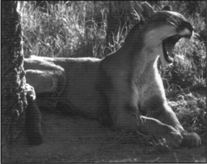
The forests of Vancouver Island are home to Puma concolor, more commonly known as puma, mountain lion, or cougar, as they are called here. This amazing relative of domestic cats has the greatest range of any large wild terrestrial mammal in the Western Hemisphere. The island has one of the highest concentrations of cougars in the world.

If you are planning a trip to visit the big trees of the island, an encounter with a cougar is possible. Hiking in wilderness areas increases the likelihood of having an encounter. You can help yourself (and the cougars) by learning a bit about these elusive creatures before you go into their forest home.

While doing research on these stalk and ambush predators I found some potential ways to protect myself while out hiking. One of my favourites was a recommendation to wear a hat or hoodie with large eyes painted on the back. Another was to frequently look up, around, and behind you as you hike to show a cougar that you are being alert. Ambushes happen when the prey is not paying attention.

The BC government website has some good, comprehensive information in their Safety Guide To Cougars. I have included some of their tips below.

When in Cougar Country:

We have little understanding about what might trigger an attack, but following these general guidelines will reduce the risk of cougar conflict and prepare you in the unlikely event of an attack.

 Hiking or working in cougar country:
  • Hike in groups of two or more. Make enough noise to prevent surprising a cougar.
  • Carry a sturdy walking stick to be used as a weapon if necessary.
  • Keep children close-at-hand and under control.
  • Watch for cougar tracks and signs. Cougars cover unconsumed portions of their kills with soil and leaf litter. Avoid these food caches.
  • Cougar kittens are usually well-hidden. However, if you do stumble upon cougar kittens, do not approach or attempt to pick them up. Leave the area immediately, as a female will defend her young.
Cougar
If you meet a cougar:
  • Never approach a cougar. Although cougars will normally avoid a confrontation, all cougars are unpredictable. Cougars feeding on a kill may be dangerous.
  • Always give a cougar an avenue of escape. A cougar that feels trapped is unpredictable.
  • Stay calm. Talk to the cougar in a confident voice.
  • Pick all children up off the ground immediately. Children frighten easily and their rapid movements may provoke an attack.
  • Do not run. Try to back away from the cougar slowly. Sudden movement or flight may trigger an instinctive attack.
  • Do not turn your back on the cougar. Face the cougar and remain upright.
  • Do all you can to enlarge your image. Don't crouch down or try to hide. Pick up sticks or branches and wave them about. Hold your back pack above your head.
If a cougar behaves aggressively:
    Cougar
  • Arm yourself with a large stick, throw rocks, speak loudly and firmly, or growl. Convince the cougar that you are a threat not prey.
  • If a cougar attacks, fight back! Many people have survived cougar attacks by fighting back with anything, including rocks, sticks, bare fists, and fishing poles.
Cougars are a vital part of our diverse wildlife. Seeing a cougar should be an exciting and rewarding experience, with both you and the cougar coming away unharmed. However, if you do experience a confrontation with a cougar or feel threatened by one, immediately inform the nearest office of the Conservation Officer service.

11/12/2011

Coastal Fall Colours

Bigleaf maple provide a splash of yellow on Lower Thetis Lake trail
Unlike the great deciduous forests of eastern North America, the coastal temperate rainforest is not a place people come to see fall colours. We have our share of colourful broad-leaf trees, it is just that they are a minor part of the forest. But what they lack in fall attire, they make up for in their importance to the forest ecosystem.

Here the giant centuries old conifers rule the land while deciduous trees are relegated to the fringes and clearings of the forest.

Arbutus is a broad-leaf tree that keeps its leaves,
but continuously sheds its bark- deciduous and evergreen.

Dense stands of mature conifer forest contain few colourful fall trees, but where the continuous canopy is broken, broad leaf trees fill in. Rocky outcrops form clearings in the forest, providing space for Garry oak and Arbutus to move in.

Arbutus is Canada's only broad-leaved conifer - it does not shed its leaves in the fall, and they are green year round. However, this beautiful, sun-loving tree does shed its orange-brown bark to reveal the fresh green bark underneath.

Large Bigleaf maple, Sooke River Road

Barrow's Goldeneye


Local lakes and rivers often have large Black cottonwoods growing along the freshwater waterfront. These massive moisture-loving trees provide perches and nesting sites for eagles and other large birds of prey.

More than 60% of the world's Barrow's goldeneyes nest in Black cottonwood trees. Right now cottonwoods heart-shaped leaves are turning yellow and carpeting the forest floor.


Black cottonwood form the
upper canopy along the Goldstream River

Deciduous trees are a small yet important part of the coastal forest ecosystem. They are the pioneer trees that reclaim disturbed areas for the future conifer forest. Red alder, usually the first tree to colonize areas like clear cuts, can fix nitrogen into a form plants can use. Deciduous leaves are less acidic than conifer needles, and are a rich source of nutrients for building the soil.

Broad-leaved trees also provide important wildlife habitat. Woodpeckers excavate new cavity nests each year, and these are frequently made in deciduous trees. Deciduous don't live as long, and decay faster than the resinous, long-lived conifers, making them perfect for cavity nesting.

Downy and Hairy woodpeckers
need deciduous trees for nests


Over 20 species in British Columbia are secondary cavity nesters, animals that can not excavate their own nests. These creatures move in to the year old abandoned holes, and include saw-whet owls, black-capped chickadees, flying squirrels, and martin.


Although the deciduous contingent of the coastal forest may be hard to see throughout the summer, their fall colours make it difficult for them to go unnoticed, giving them their moment of much-deserved glory.

7/14/2011

Forest Creatures: Snakes

Of Vancouver Island's four species of snake, one is threatened and very rare

Snakes are a forest creature with an undeserved bad reputation. I thought of this when I came across a snake carcass along the Galloping Goose Trail as it passes through a mix of natural forested areas and urban development near Thetis Lake Park.

At first I thought it may be a snake skin left after a moult, but upon closer inspection, I could see that it was a near complete carcass. I wonder if the snake met its end at the hands of a fearful human unaware of the snake's harmlessness, and its importance in the forest ecosystem.

The hinged jaw can be seen in this detail
Of eighteen reptile species in British Columbia, nine are snakes. There are four kinds of snakes on Vancouver Island, and all of them are harmless.

There are 3 species of garter snakes, the Northwestern, the Western Terrestrial, and the Common garter snake, as well as the threatened Sharp-tailed snake that can be found in this area.

The only things that need to be afraid of these snakes are worms, slugs, baby birds, small rodents, tadpoles or fish - all favourite foods of snakes.

The snakes of Vancouver Island, like all snakes, eat their prey whole. They have a jaw that can dislocate to accommodate large meals, like the largest slugs in the world - Banana slugs. I have witnessed a large garter snake eating a large slug in a slow motion battle of patience vs. slime in the middle of a forest trail.

Snakes are important both as predators and prey, and keeping other species populations in balance. Eliminating snakes could cause unwanted increases in numbers of snakes' favourite prey, such as mice. They are also important because they provide food for other species such as owls, hawks, and mammals. 

Three of the four varieties of snakes in our area give birth to live young, from 2 - 85 baby snakes in a clutch.

The rare Sharp-tailed snake is found only in the southeastern part of Vancouver Island, and the southern Gulf Islands. They lay a clutch of eggs, that the young will hatch out of, in the spring.

Habitat destruction has caused an alarming drop in Sharp-tailed numbers - their undeserved bad rap doesn't help.

If you live in their range and have a hibernaculum, or underground hibernation chamber, on your property, it should be protected. You can also build a hibernaculum to encourage the recovery of this species, or attract the garters.

How To Build A Snake Hibernaculum
  • Dig a hole 2 metres deep and 1.5 metres square in a warm, sunny clearing next to a woodlot. It's important that water does not accumulate at the bottom of the pit. Otherwise, it will likely freeze and kill the animals.
  • Loosely fill the pit with logs and stumps, brush, and boards, mixed with leaves and soil. Or, to accommodate snakes that prefer to hibernate in rock mounds and cavities, fill with large odd-shaped rocks. There should be plenty of cavities left for the snakes to move around.
  • Cover the pit with a one-metre-high mound of brush, leaves, and soil for further insulation and protection from predators: source

Snakes are important parts of the coastal forest ecosystem - enjoy viewing these amazing, colourful creatures, but do so from a distance. Although they are considered harmless, they might give you a pinch if startled or handled roughly.

6/28/2011

World's Largest Organism Lives In The Forest, But Is Not A Tree

This is Armillaria ostoyae, popularly known as the honey mushroom
- the visible part of the world's largest organism
Trees can get pretty huge on the Pacific coast, but they are not nearly the largest living things on earth. The following article describes a fungus (Armillaria) that lives in the forest, and has become the largest living thing science has described so far. At 2400 years old, it is doing well in the longevity category as well.

Often, in the forest, trees and fungus work symbiotically together, both benefiting from their association. Unfortunately, the giant colony of Armillaria discovered in 1998 is a threat to trees, and has been killing them in sizable numbers.

The Independent
By Jeff Barnard

Sunday, 6 August 2000


"The largest living organism ever found has been discovered in an ancient American forest.

The Armillaria ostoyae, popularly known as the honey mushroom, started from a single spore too small to see without a microscope. It has been spreading its black shoestring filaments, called rhizomorphs, through the forest for an estimated 2,400 years, killing trees as it grows. It now covers 2,200 acres (880 hectares) of the Malheur National Forest, in eastern Oregon. 

The outline of the giant fungus stretches 3.5 miles (5.6 kilometres) across, and it extends an average of three feet (one metre) into the ground. It covers an area as big as 1,665 football fields. 

The discovery came after Catherine Parks, a scientist at the Pacific Northwest Research Station in La Grande, Oregon, in 1998 heard about a big tree die-off from root rot in the forest east of Prairie City. 

Using aerial photos, Ms Parks staked out an area of dying trees and collected root samples from 112. She identified the fungus through DNA testing. Then, by comparing cultures of the fungus grown from the 112 samples, she determined that 61 were from the same organism, meaning a single fungus had grown bigger than anything anyone had ever described before. 

On the surface, the only evidence of the fungus are clumps of golden mushrooms that pop up in the autumn with the rain. "They are edible, but they don't taste the best," said Tina Dreisbach, a botanist and mycologist with the US Forest Service in Corvallis, Oregon. "I would put lots of butter and garlic on them." 

Digging into the roots of an affected tree, something that looks like white latex paint can be seen. These are mats of mycelium, which draw water and carbohydrates from the tree to feed the fungus and interfere with the tree's absorption of water and nutrients. The long rhizomorphs that stretch into the soil invade tree roots through a combination of pressure and enzyme action. 

In 1992, another Armillaria ostoyae was found in Washington state covering 1,500 acres, near Mount Adams, making it the largest known organism at the time.
"We just decided to go out looking for one bigger than the last claim," said Gregory Filip, associate professor of integrated forest protection at Oregon State University, and an expert in Armillaria. "There hasn't been anything measured with any scientific technique that has shown any plant or animal to be larger than this." 

He said scientists want to learn to control Armillaria because it kills trees, but they also realise it has served a purpose in nature for millions of years."

6/22/2011

First Day of Summer

Under a big Arbutus in Roche Cove Park, East Sooke
Yesterday at about 10:30 am we hit the summer solstice, and today is the first whole day of summer. I don't like to think about the days getting shorter now. Instead, I look forward to the sun and heat that summers bring to the coastal forest. And things are beginning to heat up.

You can smell it when out in amongst the trees. It smells dry, and distinctly like conifers. The heat carries the smell of sap and the full on growth that is taking advantage of having adequate water, sunshine, and heat. The biodiversity can be smelled on the breeze. It is rich here.
Sun by Joe Wilson, Duncan, BC

Large, downed logs in the forest that are saturated in winter rains will carry moisture through dry periods in the summer. Many creatures, salamanders included, will seek refuge in these vital habitats.

The coastal forest is always wild, but the summer is the most forgiving season. It is a good time to get out to visit the big trees. Enjoy, and let us know when you find big ones not mentioned here.

6/08/2011

Forest Creatures: Great Blue Herons

Endangered Great blue herons live in the coastal forest

It was on one of my hikes of Vancouver Island's West Coast Trail that I learned of an endangered species living in the coastal forest. Great Blue Herons, the largest North American herons, are year round residents. And they build their nests in trees.

We were hiking toward Nitinat Narrows when we first heard the primeval squawk of Great blue herons. As we approached, the noise was a discordant symphony of primitive vocalizations - it was the first heronry I had ever seen, or heard, and it was both chaotic and beautiful.

Heron chicks on the nest
It seems weird for these long-legged, large birds to be hanging out in the tops of tall trees. They seem more comfortable stalking prey in shallow water.

But for the part of the year when they are nesting, they make their large homes built of sticks at the tops of huge coastal trees.

Although herons are on the endangered species list, it would be hard to tell during a visit to the south island area. There are many herons around, including in my own neighbourhood. It is not uncommon to see up to 10 herons tolerating each other in rich, low tide seaweed beds of the Sooke River estuary. One can also find heron nesting sites in several locations, including one urban heronry in Beacon Hill Park in Victoria.

While herons are not social for most of the year, when it comes to breeding time, around March, these solitary birds come together in large groups. The Beacon Hill Park herons had established a large heronry in the 1980s, numbering up to 100 nests at its largest. It was a rare urban wildlife experience. Until 2007, when a resident bald eagle started to prey on the heron's nests.

Heron parents defending their nest from another Birdzilla attack in 2007, Beacon Hill Park

The eagle, nicknamed 'Birdzilla', quickly tore through the heronry, and within the course of a weekend had gone through 71 nests and consumed 39 chicks and 187 eggs. The herons, as herons will do when harassed by predators, bailed as a group, and abandoned their long-time nesting site. Some herons returned to the park in 2010 to establish new nests. Herons have been seen taking sticks from the old nests to build new ones.

Herons swallow food whole - some have been known to die in the attempt

Herons can be found in a range of habitats such as fresh and saltwater marshes, mangrove swamps, flooded meadows, lake edges, or shorelines, but are always found close to bodies of water. Their tree top nesting sites are usually always no more than a few kilometers from aquatic feeding grounds.

The primary food for Great blue herons is small fish, though it is also known to feed on a wide range of shrimp, crabs, aquatic insects, rodents and other small mammals, amphibians, reptiles, and small birds.

Photo credit: all photos (except Beacon Hill eagle attack) from Wikipedia
Beacon Hill photo: Rhiannon Hamdi

4/12/2011

Spring In The Coastal Forest

Skunk cabbage in wetland
A welcome sign of spring in the coastal forest, besides deciduous plants budding out, are the early flowers.


Skunk cabbage (Lysichiton americanus) and white fawn lilies (Erythronium Oregonum) are two early spring flowers that brighten up the dark coastal forest as winter rains begin to give way to sunshine and warmer temperatures.


Skunk cabbage emerges early in wetlands and moist forests throughout Vancouver Island. This unique, tropical-looking flower emits a skunky scent to attract insect pollinators. The bright yellow flower along with its pungent smell is hard to miss, and it is a sight for yellow-starved eyes after long, grey winters.


Skunk cabbage on moist forest floor

Skunk cabbage is edible, and all parts of the plant can be eaten. It contains substances that can be harmful, so caution is required.


White fawn lilies gracing a mossy, fern-covered rock face

White Fawn lilies are delicate white flowers that also make an early appearance once spring has arrived on the calendar, if not in the weather. These whiter than white dangling flowers dot the landscape, carpeting meadows and the forest floor. They can also be found clinging to rock features surrounded by puffy yellow-green mosses.

White fawn lilies have brilliant pendant flowers hanging from long stalks

It turns out that Erythronium, a genus of 20 - 30 species of perennial plants with long bulbs and pendant flowers, are also edible. The bulb, or corm, can be cooked, or dried, and can be ground into flour (using a flower to make flour). The beautiful green leaves are mottled with brown and white, and can also be cooked and eaten.

The wide leaves of Fawn lilies emerge early from the carpet of brown detritus

Spring 2011 may be coming slowly to the coastal forest, but you can't tell from the Skunk cabbage and Fawn lilies. They are coming up full force, regardless of overcast, cool days. They seem to be saying, "It is spring - let's grow. Let's do this thing."

Right now is a good time for a walk in the woods. You will witness all of life waking up for another season. Treat yourself, and experience the magic of Spring in the coastal forest.

1/28/2011

Major Moss In B.C.'s Coastal Forests

This giant Douglas-fir snag makes a perfect scaffold for the moss

Fluorescent green flashes catch my eye whenever I am out in the forest. It is not surprising as anything that doesn't move in the coastal forest gets covered in deep, luxurious moss. Actually, I can say that even things that roll grow moss in the rain forest - my vehicle is slowly turning green. If left long enough it would disappear entirely, as would I if I ever fell on a hike and couldn't get up.

Detail of tree above showing a Western hemlock seedling growing out of the moss

British Columbia possesses the richest diversity of mosses, or bryophytes, in Canada. The amazing diversity of this large group of special non-flowering green plants is due to the varied terrain  of the province, as well as historical developments that led to holdovers surviving from before the last ice age. B.C.'s huge collection of mosses is greater than the combined mosses of all of the U.S. west of the Rocky Mountains. That's major moss.

The moss on big trees can be several centimetres thick, and cover the bark completely

This time of year the mosses are hydrated and at their colourful best. Moss can hold a whopping 25 times its own weight in moisture. They are efficient sponges which can add tons of weight to the limbs of an old tree, making them more susceptible to wind damage.

Old Bigleaf maple branches grow a covering of moss and ferns

Mosses are a special kind of green plant because they are non-vascular, meaning they do not have xylem or phloem (tissues that transport water and nutrients) like trees and other vascular plants. The Bryophytes are sometimes referred to as "lower" plants because they evolved earlier in the history of green stuff on the planet.

Winter, when trees don't have leaves, is a good time to see the full extent of the moss

The mosses shown here are all epiphytes, meaning that they do not harm the trees they are growing on. The base of trees provide a scaffold for the moss, but the moss derives all its nutrients from the air and rain, not from the tree. Mosses do not have true roots, only root-like threads called rhizoids. In the summer, mosses can dry right out. They survive by lowering their metabolism until the rains come again to fluff up the green cushions.


Could it be Amblystegium serpens, or Creeping feather moss?

Sometimes moss seems like it is from a different planet. Mosses are a varied, wonderful, and ubiquitous part of the coastal forest. So many different types of moss growing in so many different shades of fluorescent green. Just remember to keep moving out here or you may find yourself turning green.

Resources

For a good introduction to B.C. mosses see:

Schofield, W. B. 1992. Some Common Mosses of British Columbia. Royal BC Museum Handbook. Queen's Printer, Victoria, BC. 394 pages. Illustrated.

11/30/2010

BC Ministry of Forests and Range Research Branch Disbanded After 80 Years of Service

Pipestone Inlet near Ucluelet, from BC Ministry of Forests, Mines and Lands
Barbara Hawkins is a professor in the University of Victoria Centre for Forest Biology and a registered professional forester. She has been involved in forest research in B.C., New Zealand and Thailand for 25 years. The following is an article she published in Victoria's Times Colonist newspaper November 26, 2010:

Unnoted last week amid the political confusion, British Columbians lost a venerable institution. After a proud, 80-year history, the research branch of the Ministry of Forests and Range was disbanded. It is ironic, in the government's self-declared Year of Science, that it should dismantle such an internationally respected scientific institution.

B.C. is a world leader in many areas of forest research. Our excellent reforestation record, forest genetics program, long-term growth and yield experiments, forest growth models and ecologically based biogeoclimatic classification system were founded on sound science and are the envy of many countries.

The research was conducted collaboratively by provincial, federal, university, industrial and community institutions. Scientists from each of these institutions have distinct priorities and capabilities, and one cannot replace the other. University and industry scientists cannot provide the continuity and long-term commitment needed for some types of forest research.
The loss of a united, cohesive research branch is a loss to us all.

At a time when the need for forest research is pressing, the government's lack of support is baffling. In the past two years, the Forest Investment Account forest science program has been cut, eliminating competitive funding for forest researchers in all institutions, and the research branch suffered layoffs of approximately 25 per cent of its staff. Last week, the final blow was to disperse the remaining staff in the research branch to four separate ministries.

Climate change is already having dramatic impacts on our forests, with more likely to come and the forest industry is in an obvious state of change. B.C. needs to position itself to maintain healthy, productive forests providing sustainable ecosystems and raw materials for a diversified forest industry. This can only be achieved through sound basic and applied research and monitoring built on long-term vision.
No rationale has been given for the drastic changes within the Ministry of Forests and Range. Doubtless, government ministries, like trees, are improved by judicious pruning. A tree cut off at its roots, however, does not bear fruit.

8/05/2010

Extreme Fire Hazard In B.C. Forests


The burning red sunsets that we have been having lately on Vancouver Island are a reminder of fires burning in the interior of the province. Although no fires have been reported on the island, smoke from the mainland has drifted over our skies making for some spectacular evening light shows.

Our temperate rain forest essentially has two seasons - the wet rainy winter season, and the hot dry summer season. During most years the forest dries up over the extended sunny summer. Older trees on the island usually show evidence of fire scars on their bark. In some wetter areas on the coast, forests have avoided large fires for up to two thousand years!

Currently all of Vancouver Island is experiencing an extreme fire hazard, and authorities are reminding everyone that we can help prevent needless fires. A campfire ban has been in effect for a while now, and smoking is being discouraged in the back country.

It is hot and dry out there - perfect for enjoying some camping and hiking in the trees. Please be careful. Our forests are depending on it.

6/22/2010

Visit The Big Trees

I just posted a new page for VIBT which is accessed by a button under the banner. It is called "Visit The Big Trees", and in it I list some of the big tree places that I have visited, or would like to visit.

It is my hope that this list will encourage others to visit these ancient trees and endangered places. Some locations are in parks, others are on private land. A few are currently threatened by ongoing logging. By visiting these places we can recognize their importance and work toward preserving them.

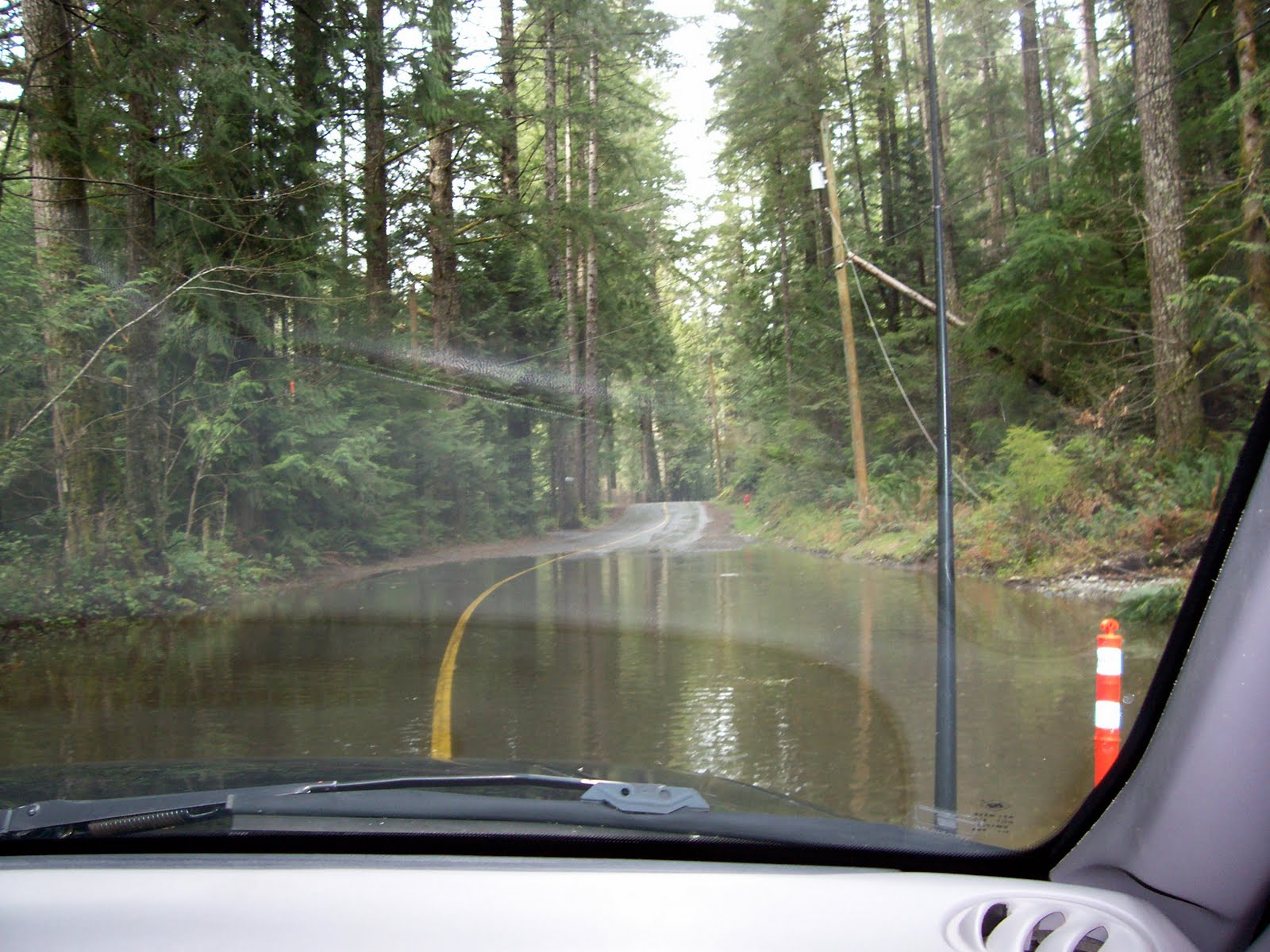
Most of all, I want to introduce people to a beauty that is unparalleled globally. Vancouver Island has some of the most beautiful trees and forests on the planet. Plan to go see them, and prepare to be blown away. Be wary of wild and natural locations. And big puddles.

Link to the 'Visit The Big Trees" page here.

6/05/2010

Building With Wood: Sooke's Accessibility Ramp/Marine Boardwalk


It is hardly surprising that Sooke should sport the world's longest wooden access ramp. This is the land of big trees after all, and trees mean wood, one of the most versatile building materials on the planet. Not only versatile, but if used properly, renewable as well.


Ed MacGregor Park, near the centre of town, provides access to the impressive wooden structures known as the Accessible Walkway and Marine Boardwalk. This combination makes the park, trees, waterfront, and views over the Juan de Fuca available to all. These impressive wood structures continue a long-standing tradition of working with wood on the coast.


The Coast Salish, this area's original inhabitants, have been using Western red cedar extensively for thousands of years. Items made from wood include clothing, totem poles, art, and large structures. Huge longhouses of cedar split plank accommodate up to 50 people. Ocean-going canoes made from massive whole cedar logs plied the waters from Alaska to California.


European settlers have also used the abundant wood resources of Vancouver Island to build impressive structures including houses, piers, and boardwalks all over the world. The piers of San Francisco were built with wood from Vancouver Island. Some of the largest wooden rail trestles in the world, such as the Kinsol Trestle, which will soon undergo refurbishment, is one such structure. This massive engineering feat near Duncan was completed in 1920 using massive Douglas fir beams.


Most trails on the coast use wooden structures to aid hikers in their passage through the rain forest. A hiker is very likely to be thankful for the careful work of trail builders and wood workers that construct bridges, boardwalks and ladder systems in order to cross the rugged terrain.


Wood is an amazing material, and I am continually surprised and delighted by the many things people have done with it. Pacific coast builders and artists have continued a unique wood-centered culture. I am not sure if the Ed MacGregor Accessible Walkway is the longest such ramp in the world, but it is an impressive engineering feat.


Try the zig zag switchbacks some time, then walk the 1000m Marine Boardwalk. At the other end of the boardwalk you will find a couple of sets of wooden stairs leading up to Murray Road. If you walk Murray back up to Sooke Road you can then hang a left and complete the loop at the Ed MacGregor Park parking lot. Don't forget to enjoy the trees along the way... and perhaps thank them.